
Dr. Stefanie Reichelt
Urban Commons & Microbiology
Stefanie Reichelt combines academic and practical perspectives on microbiology, urban ecosystems and commons-oriented responsibility.
Her work deepens nextlearning’s exploration of how living infrastructures can be understood, maintained and designed as shared foundations of urban life.
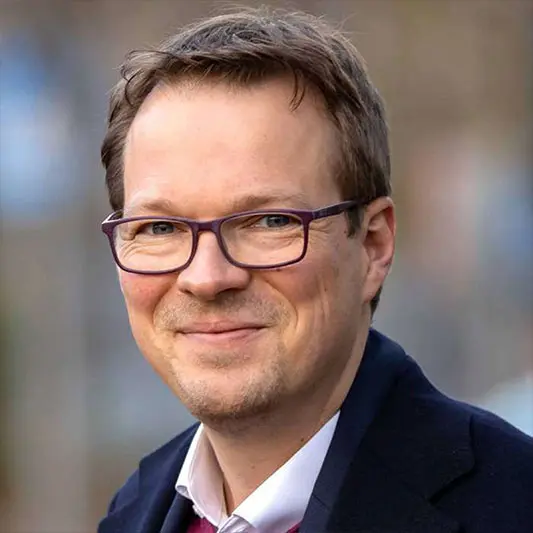
Dr. Andreas Sorge
Science-Based Decision Design
Dr Andreas Sorge is a Research Fellow for Decision Design and public decision-making at nextlearning.
As part of the Decision Design initiative, he contributes to the academically grounded development of data-informed spaces for public deliberation and decision-making—formats and processes that support societal actors in making robust decisions under conditions of complexity, uncertainty and acceleration.
His fellowship focuses on connecting decision research, data, models and institutional practice.
Together with nextlearning, he investigates how different forms of knowledge, perspectives and evidence can be brought together to make societal decisions more anticipatory, transparent, adaptive and oriented towards the common good—particularly in the context of the growing use of artificial intelligence.
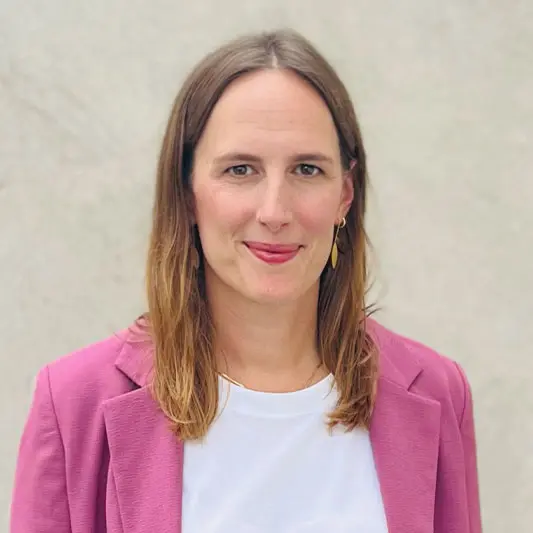
Johanna Sieben
Experience Design & Common Good
Johanna Sieben is a Fellow for Planetary Civics and Public Vitality at nextlearning.
She contributes to the conception, preparation and delivery of the Public Vitality Camp—a public-interest learning and working environment for people seeking to renew the responsiveness and capacity for action of public and societal systems.
Her fellowship focuses on developing formats that bring together different perspectives, ways of knowing and practical experience.
Together with the Planetary Civics initiative, she explores how societal and institutional systems can remain capable of learning, responsive and vital under conditions of uncertainty and profound change.

Jeff Kwasi Klein
Just Transformation & Co-Chair
Jeff Kwasi Klein is a political innovator, thought leader, and strategist working at the intersection of social justice and systemic transformation. He is the co-founder and co-director of imagineers lab—an interdisciplinary space for holistic transformation and the co-creation of desirable futures. As co-director of the Multitudes Foundation, he supported individuals and initiatives across Europe in shaping inclusive, representative, and humane politics.
Previously, Jeff led the community-based May Ayim Fund and established Germany’s first anti-discrimination counseling center for Black, African, and Afro-diasporic people at Each One Teach One (EOTO).
Currently, Jeff is a member of Berlin’s Advisory Council on Anti-Black Racism and serves on the expert panel of the democracy fund United for Democracy. In these roles, he advocates for the interests and empowerment of Black, Indigenous, and Communities of Colour, while contributing to the further development of democratic practice. His work centers on overcoming structural and institutionalized forms of racism and also focuses on community-building, responsible leadership, and generative imagination.
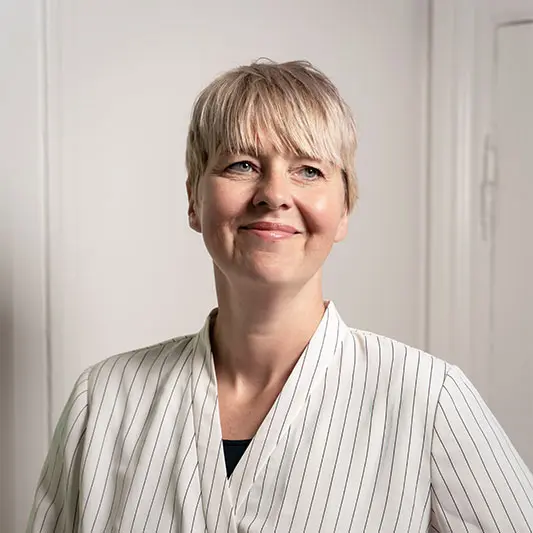
Lene Krogh Jeppesen
Public Sector Innovation & Board Member
Lene is a sociologist (BA and MSc) from the University of Kopenhagen. She has worked with public sector innovation and knowledge sharing in the Danish public sector for more than a decade. Her focus is on building innovation capacity for employees and leaders in the public sector; To utilize new methods and tools to achieve better results; To ensure public sector collaborations with the private sector, citizens, and knowledge institutions when delivering relevant and better services for the common good.
Lene works for The Danish National Center for Public-Private Innovation. Here she facilitates experiments that attempt to redesign governance to better meet our current challenges. Specifically, how to lead, collaborate, measure progress, and govern new roads to delivering relevant and better services.

Rose Casey
Virtual Assistance
Rose is a Virtual Assistant with over 7 years of PA experience. After completing her Masters in Film & Television studies at Birkbeck University, she worked in Television post-production and as a Personal Assistant to the Board of Directors at a London Design Agency, before setting up her Virtual Assistant business Stow Va.
As a Virtual Assistant, Rose works with a number of different clients, juggling a variety of different workloads including diary and email management, travel bookings and document formatting, amongst many other things. At Politics for Tomorrow, Rose works mainly with Caroline Paulick-Thiel and supports her with excellent communication and management skills on a daily basis.

Vlad Afanasiev
Planetary Foresight & Sovereign Technology
Vlad Afanasiev is a strategic designer and researcher specialising in urban and environmental governance, foresight methods, predictive simulation and modelling.
Before joining nextlearning, he was part of The Terraforming research programme and contributed to regional and national strategic projects across Ukraine, focusing on territorial development and decentralised governance.
He currently teaches in the City & Technology programme at the Institute for Advanced Architecture of Catalonia in Barcelona.
At nextlearning, Vlad contributes art direction and systemic approaches to a range of projects. He also supports ongoing exchange and collaboration with Dark Matter Labs.
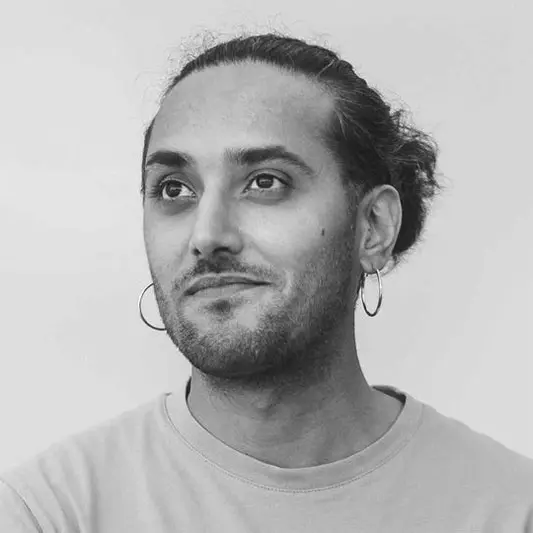
Gurden Batra
Technology Design & Intelligent Systems
Gurden is a design technologist at Dark Matter Labs and combines different crafts like systems thinking, rapid prototyping, speculative and critical design, data justice and tech materiality together in his practice. He has a background in Computer Science and New Media Design. Gurden has played multi-disciplinary roles in various industries and different sized companies across US, Europe and India.
At Politics for Tomorrow, Gurden supports various projects with his creative mind and technological expertise and bridges the regular exchange in cooperation projects with Dark Matter Labs.
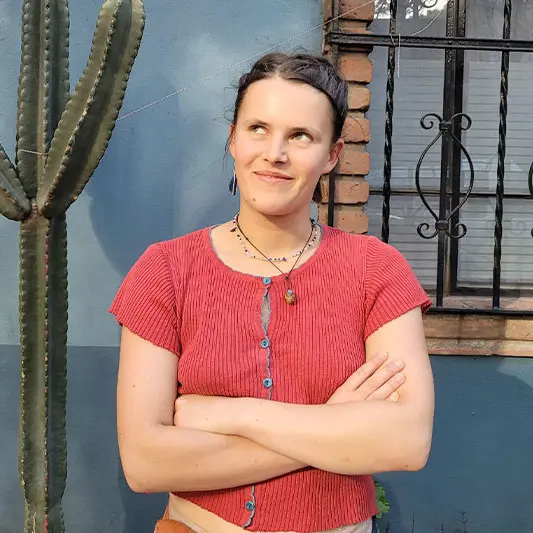
Luca Reinhold
Public Design & Regenerative Change
Luca Reinhold is pursuing a Master’s degree in Public Design at HTW Berlin, with a focus on participatory processes. At nextlearning e. V., she works as a student assistant on urban health and the development of emerging talent.
She previously completed a Bachelor’s degree in Design + Change at Linnaeus University in Småland, Sweden. Her thesis explored land-use and interest conflicts between iron ore companies and the Indigenous Sámi people in northern Sweden.
In doing so, she examined colonial continuities within the Swedish state and translated these complex relationships into the tactile, interactive exhibition “Blood of the Earth – Stories of Iron in (Extr)Activist Times”.
In 2021, she founded the citizens’ initiative Tschüss Erdgas, which successfully advocated for accelerating the energy and heating transition in Potsdam. Over three years, she designed, coordinated and facilitated the initiative’s work while maintaining close dialogue with the public administration and municipal companies.
Since 2019, she has volunteered with Drachinzeit, an association that supports young people through the transition into adulthood and creates spaces for reflection, personal development and connection with themselves and others.

Qihang Li
Public Sector Innovation & E-Governance
Qihang studied public sector innovation and e-governance (M.Sc.) and International Politics (LL.B.) in Belgium, Germany, Estonia and China. She gained experience working with think tanks, NGOs and governmental organisations and supporting colleagues and partners in field of foreign relations, technology and innovation policy. She aims to blend her expertise in research, project management, conceptualisation and community building with the passion for a just, inclusive and collaborative transformation in the society.
At Politics for Tomorrow, she works on the Nextlearning project and supports the establishment of data infrastructure and community building.
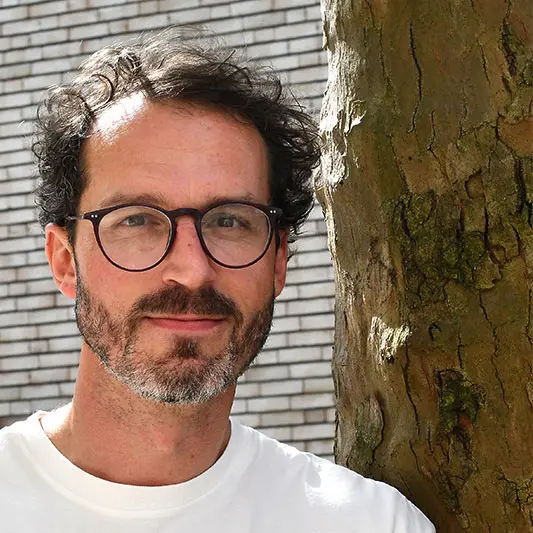
Sebastian Klemm
Social-Ecological Value & Regenerative Economies
Sebastian Klemm works at the intersection of ecological regeneration, urban transformation, and value creation for the common good. He develops approaches that connect nature-based infrastructures, local circular systems, and new governance models to enable cities and regions to establish their own regenerative development pathways and embed them sustainably within their communities.
At nextlearning, he is building the Living Values Initiative, which brings together ecological remediation, circular bioeconomy, and community-oriented urban development. Previously, he worked at Dark Matter Labs as project lead for the Trees-as-Infrastructure initiative in Stuttgart and Berlin, where he developed and tested valuation and financing approaches that strengthen urban nature as critical infrastructure for climate resilience and public health. Prior to this, Sebastian worked at the German Sustainable Building Council (DGNB), where he supported the development of a knowledge platform for the transformation towards a climate-neutral building stock.

Tim Lazaroff
Urban Development & Organisational Design
Tim is a curious, versatile urbanist with a multidisciplinary approach to organizational and societal sustainability. He pairs social sciences and his passion for reimagining governance with a business management background and practical, yet lighthearted, management style.
Before joining Politics for Tomorrow, Tim spent 4.5 years at ICLEI World Secretariat, where he collaborated with colleagues across offices, fields, and disciplines to co-manage German-funded International Climate Initiative (IKI) projects. Originally hired to write final communications deliverables, he then transitioned to finances and administration, before his role eventually grew to encompass all aspects of project management. He was particularly involved in ICLEI’s islands work, leading a 3.5-year long community resilience-building project in the Pacific and driving multiple proposals.
Tim moved to Berlin in 2019 to pursue a M.S. in Urban Management at TU Berlin. He first visited in 2015 during a Comparative Cultures of Sustainability summer course from the University of Pennsylvania, where he pursued a dual B.A. in Urban Studies and B.S. in Management (Wharton). A native New Yorker, Tim’s formative work experience was across multiple vantage points of U.S. politics: a U.S. Senator’s office, the 2016 presidential campaign, a policy research lab, and a city lobbying firm. These collectively informed his urban studies research on crisis governance of essential urban services during New York’s 2017 transit ‘Summer of Hell’ and COVID school reopening processes in New York and Berlin.
As a historian and writer, Tim publishes a monthly newsletter on Substack, Connecting Climates, and volunteers as a copywriter and editor with the New York-based Effective Transit Alliance. He loves exploring Berlin to peel back layers of its infinitely interesting history onion.
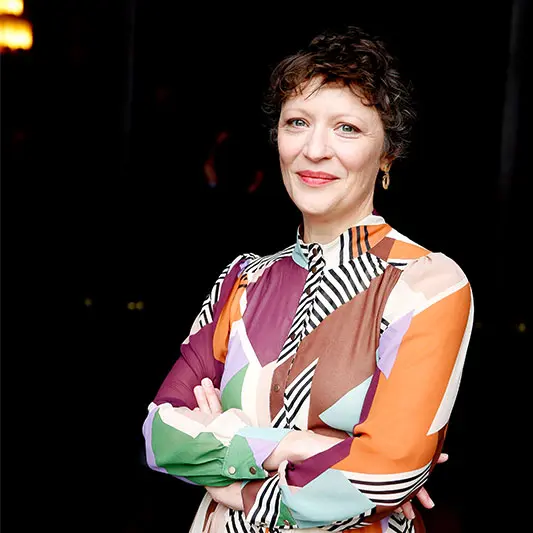
Caroline Paulick-Thiel
Strategic Design & Direction
Caroline is a strategic designer and expert in transformative public sector innovation. Trained in Design (BA) and Public Policy (MPP), she has extensive experience in developing and leading participatory processes to address public challenges.
In 2015, she co-founded Politics for Tomorrow, and facilitates societal transformation processes in collaboration with political-administrative institutions from the local to the highest federal level in Germany and internationally.
She has worked for several years in science and innovation policy, conducts applied research on public design competencies, and has extensive experience in process facilitation, strategy development, conceptualisation, and moderation in organisational development, smart city, digital, energy, and economic policy topics, among others.
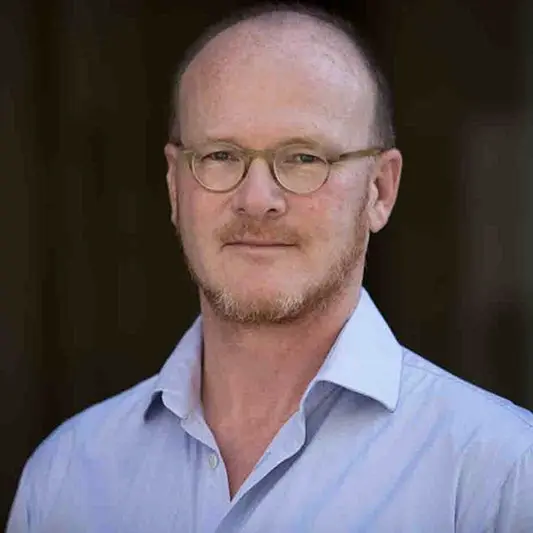
Andreas Krüger
Spatial Strategies for the Public Good & Collaborative Implementation
Andreas is an expert in public interest-oriented neighborhood development and the strategic design and implementation of complex spatial development projects. As the founder and managing partner of Belius, he brings many years of experience in developing projects at the intersection of urban development, real estate, and the public good.
He works with municipalities, public institutions, businesses, property owners, and stakeholders from the cultural and creative sectors as well as civil society to develop place-based use concepts and collaborative development processes. His focus lies on mixed-use developments that combine social value, long-term viability, and economic sustainability.
Andreas brings extensive expertise in spatial strategies, use concept development, collaborative project development, and implementation planning. He translates strategic visions into spatially, organizationally, and economically viable development pathways, working closely with the specific user needs, institutional frameworks, and governance structures of each place. His experience at Moritzplatz, Haus der Statistik, and the Round Table on Land Policy combines hands-on implementation with long-term public interest-oriented urban development and the facilitation of collaboration between public administration, politics, the real estate sector, and civil society.
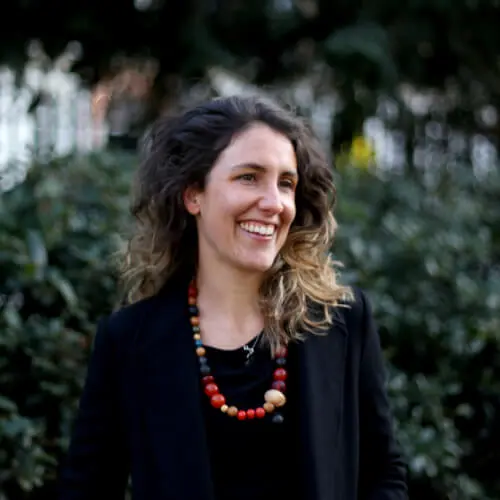
Dr. Geordan Shannon
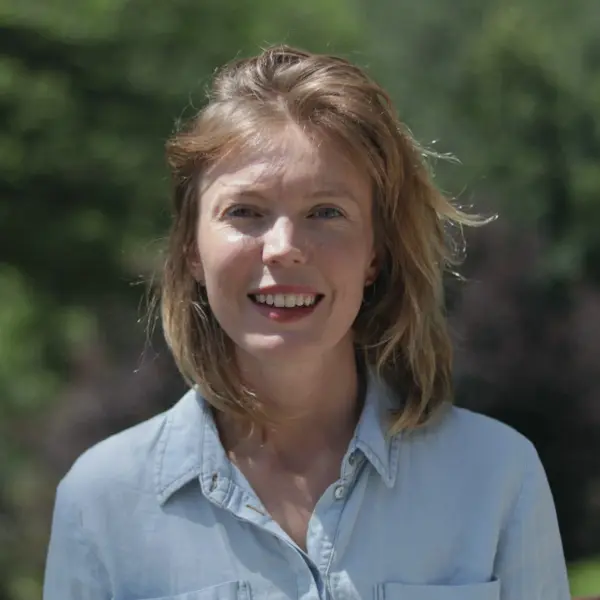
Dr. Danielle Stevenson
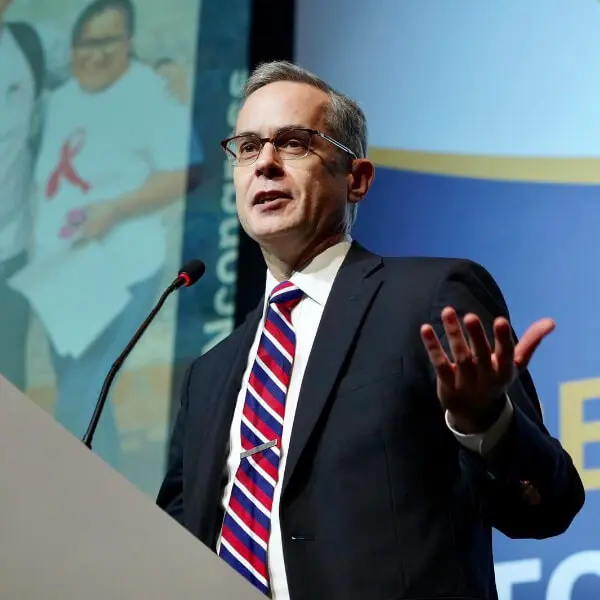
Prof. Jeremy Lauer